Brands of Bags in Pakistan — What to Look For and Why FUR Is Different
Every woman in Pakistan has stood in front of her wardrobe at some point and asked the same question.
What bag do I carry today
Not because she doesn't have options. But because the options she has seen — in markets, in malls, on Instagram — have never quite felt like her. Too cheap and it shows. Too expensive and it isn't practical. Too generic and everyone else is carrying the same one. Too flashy and it competes with everything else she's wearing.
The bag market in Pakistan has grown enormously over the past five years. More brands, more options, more price points, more styles. And yet the fundamental problem for the Pakistani woman hasn't changed: finding a bag that is genuinely well-made, genuinely distinctive, at a price that reflects honest value — not a brand tax, not a logo premium, not the cost of marketing passed on to the customer.
This is a guide to understanding what the bag market in Pakistan actually looks like — what to consider, what questions to ask, and what separates a bag worth buying from one that looks right in a photograph and falls apart in three months.
How the Bag Market in Pakistan Is Structured
When Pakistani women talk about bag brands, they are generally talking about one of four distinct segments. Understanding which segment you're shopping in changes everything about how you evaluate what you're buying.
1. Imported Luxury Brands
These are the international houses — sold at select retailers in Lahore, Karachi, and Islamabad, or imported informally through personal shoppers and grey market channels. The price points range from Rs.80,000 to several hundred thousand rupees for a single piece.
For most Pakistani women, these are aspirational purchases at best. The material quality is genuinely exceptional. The craftsmanship is documented and consistent. But the price reflects far more than the bag — it reflects decades of brand building, advertising spend, celebrity endorsement, and the premium attached to a visible logo. You are paying for the name as much as the object.
The honest question to ask: do you actually want the bag, or do you want to be seen with the bag? Both are valid answers. But they lead to very different purchasing decisions.
2. Mid-Range Local and Regional Brands
This is the most competitive and, frankly, most interesting segment of the Pakistani bag market. Brands operating in the Rs.2,000 to Rs.15,000 range, producing their own designs, building their own identity, and competing directly for the attention of Pakistani women who want something real without paying an imported luxury premium.
Quality in this segment varies enormously. The material used — genuine leather versus PU versus bonded leather versus raw synthetic — is the single biggest determinant of whether a bag lasts six months or six years. Stitching quality, hardware weight, lining durability, and zipper strength are the details that separate the serious players from the copyists.
This is also the segment where Pakistani women are increasingly making smarter decisions — asking about materials, reading reviews, demanding better construction, and refusing to pay for a label on something that isn't backed by genuine quality.
3. Bazaar and Mass Market
Available at Liberty, Anarkali, Hyderi, and their equivalents in every city. Price points from a few hundred rupees to Rs.2,000. These bags serve a real purpose — affordable, functional, available. But they are not built to last, and they are not designed with any particular intention beyond moving inventory.
The woman shopping here is usually shopping for utility, not identity. There is nothing wrong with that. But she deserves to know what she's buying.
4. Custom and Artisan
A small but growing segment — individual craftspeople and small workshops producing leather goods with genuine skill. Often found through word of mouth or social media. Quality can be extraordinary but consistency is harder to guarantee, and after-sales support is typically non-existent.
What Actually Makes a Good Bag — The Dimensions That Matter
Before talking about which brand to choose, it's worth understanding what separates a genuinely good bag from one that merely looks good. These are the dimensions any serious buyer should evaluate — regardless of price point or brand name.
Material — The Foundation of Everything
This is the most important dimension and the one most frequently obscured by brands that don't want you to look too closely.
Genuine leather — full-grain, top-grain, or corrected-grain — is made from the actual hide of an animal. It ages well, develops a patina, breathes, and when properly maintained, lasts for years. A genuine leather bag carried daily will look better at three years than it did at three months. The smell, the texture, the weight — these are identifiable once you know what to look for.
PU leather (polyurethane) is a synthetic material that can be made to look remarkably like genuine leather. It is lighter, more uniform in texture, easier to clean, and significantly less expensive. A well-made PU leather bag from a serious brand is an excellent product — durable, consistent, and honest about what it is. The problem is when brands sell PU at genuine leather prices, or use PU of such low grade that it begins peeling and cracking within months.
Bonded leather is the category to be most cautious about. It is made from scraps of leather and synthetic materials bonded together, and it has a tendency to separate, crack, and deteriorate faster than either genuine leather or quality PU. It is often used by brands trying to use the word "leather" while keeping costs as low as possible.
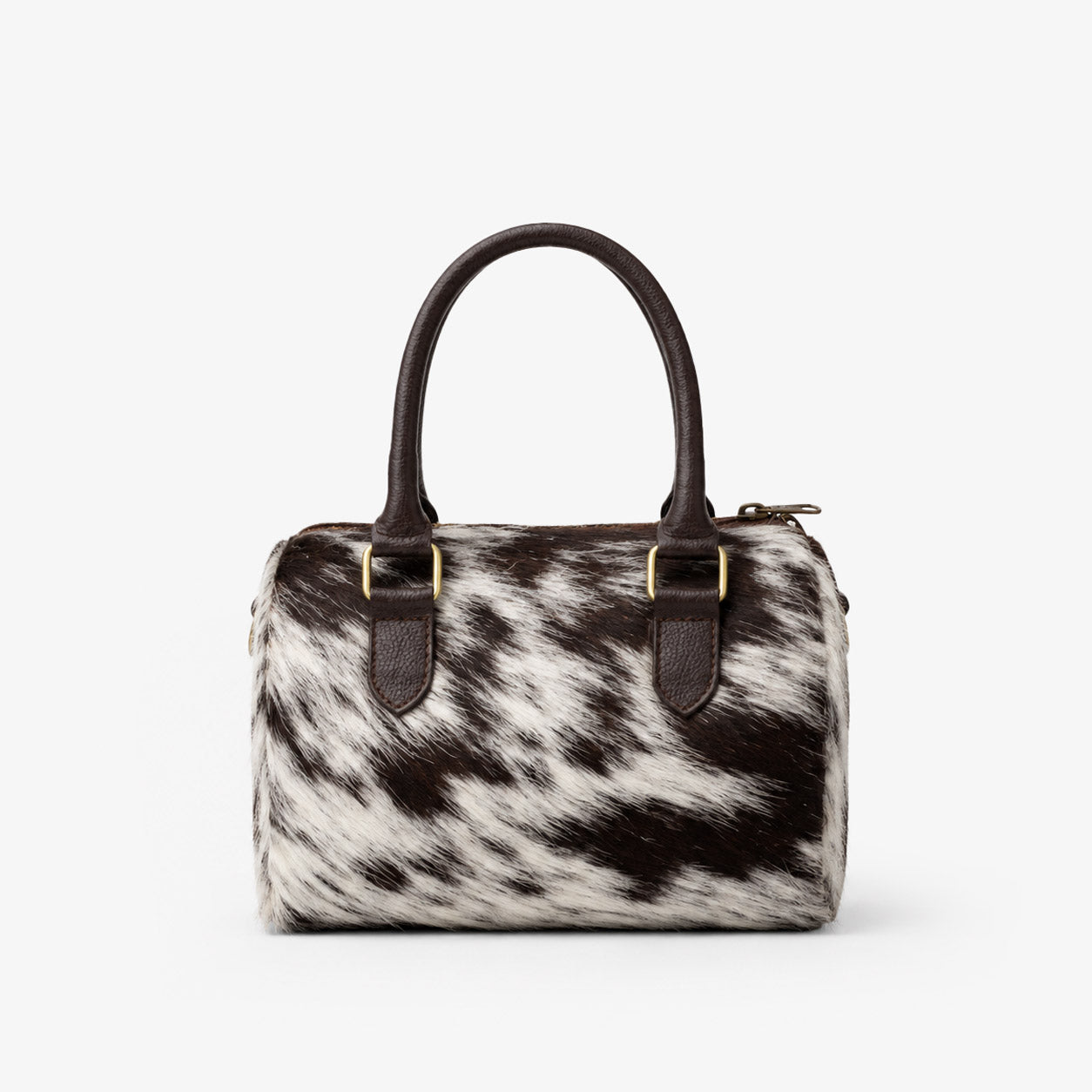
Exotic and specialty hides — goat hide, hair-on hide, suede, nubuck — occupy their own category. These materials bring unique texture, natural variation, and a distinctive quality that cannot be replicated in synthetics. A genuine goat hide bag, for instance, carries natural markings that make every piece unique. This is where the intersection of material and artistry becomes genuinely interesting.
Construction — Where Quality Shows or Hides
Material is what a bag is made from. Construction is how it is put together. A bag made from excellent material but assembled poorly will fail faster than a bag made from decent material and assembled well.
The specific things to evaluate:
Stitching. Even tension throughout. No skipped stitches. No loose threads at stress points — particularly at handle attachments, zipper ends, and corner seams. Double stitching at stress points is a sign of a manufacturer that understands where bags fail.
Hardware. Weight matters. Cheap hardware is light, has a tinny sound, and has a surface finish that begins to scratch and tarnish within weeks. Quality hardware — zinc alloy, brass, antique brass-tone — has weight, a consistent finish, and does not deteriorate with regular use. Pull on zipper pulls. Test the snap of magnetic closures. Flex the rings that attach straps. These things fail first when hardware quality is low.
Lining. The interior of a bag tells you what a brand thinks of you when you can't see the marketing. A well-lined bag has a fabric that doesn't pill or tear, is secured at seams without bubbling, and has enough structure to support the shape of the bag from the inside. A poorly lined bag has a lining that begins separating from the interior walls within months of use.
Shape retention. A structured bag should hold its shape when empty. If a bag collapses on itself the moment you remove your things, the internal structure — the base board, the side panels, the frame — is inadequate.
Design — Function and Aesthetic in Balance
Design is the dimension most talked about and, often, least well understood. A bag can be beautiful in a photograph and deeply impractical to actually carry. The best bag design solves the problems of carrying things through a day without creating new ones.
Silhouette. The overall shape of a bag determines what it goes with and how it carries. Structured silhouettes — totes, trapeze shapes, barrel bags, top-handle bags — work well with both formal and casual Pakistani dress. They hold their shape, photograph cleanly, and age well. Slouchy or unstructured bags are easier to fill but harder to style and tend to look exhausted after extended use.
Handle engineering. This is a detail that is rarely discussed but immediately felt. Handles that are too short create an awkward carry. Handles that are too long drag against your side. The attachment point — where the handle meets the bag body — is a stress point that fails on poorly engineered bags. Rolled leather handles distribute weight differently to flat handles. The choice between a fixed handle and an adjustable strap changes how the bag works entirely.
Closure system. A zip closure is the most secure and the most practical for daily use. Magnetic closures are faster to open but offer less security. Open-top totes are the easiest to access but offer no protection for contents. The right closure depends on how you use the bag — but a bag with no closure at all is rarely the right choice for a woman who moves through the world with her essentials.
Interior organisation. Pockets are not optional. A woman's bag contains her phone, her keys, her wallet, her lipstick, her medications, and approximately forty other things that need to be findable in under ten seconds. A bag with no interior organisation is a bag that will frustrate its owner every time she opens it.
Price Integrity — What You're Actually Paying For
This is the dimension Pakistani consumers are becoming most sophisticated about, and it is changing the market.
Price in the bag market can mean many different things. It can mean material cost. It can mean craftsmanship. It can mean marketing overhead. It can mean import duty. It can mean a logo tax. The question every buyer should ask is not "how much does this bag cost" but "what am I paying for at this price."
A Rs.8,500 bag from a Pakistani brand with genuine leather, quality hardware, and honest construction represents extraordinary value. The same Rs.8,500 spent on a synthetic bag with a visible logo represents something very different — you are paying for the marketing, not the product.
Pakistani women are increasingly making this distinction. The fastest-growing segment of the local bag market is not the cheapest and not the most logo-heavy. It is the middle segment — brands that put their money into the product rather than the packaging, and charge prices that reflect the actual quality of what they make.
What Pakistani Women Actually Want From a Bag Brand
After thousands of customer interactions, reviews, and conversations, the answer to this question is clearer than most brands acknowledge.
Pakistani women want bags that work. Not bags that photograph well — bags that actually function through a real Pakistani day. A day that might include an office, a market, a school run, a family dinner, and everything in between. A day in heat, in humidity, in the back of a rickshaw, and in a formal drawing room.
They want materials that are honest. They are tired of discovering six months after purchase that the "leather" they bought is separating from its backing. They are tired of hardware that tarnishes. They are tired of handles that loosen. They want brands that tell the truth about what they make.
They want designs that reflect who they are — not who a brand's marketing team imagines they want to be. Pakistani women are not a demographic. They are individuals with distinct personalities, aesthetics, and lives. The best bag brands understand this and create ranges that offer genuine choice rather than colour variations of the same silhouette.
And they want to be treated as intelligent adults. Not talked down to with aspirational language that papers over product shortcomings. Not misled about materials or construction. Not charged a premium for a logo that adds nothing to the object itself.
FUR — Built in Lahore, Built for Pakistani Women
FUR was not built to be another bag brand in Pakistan. It was built to be a different kind of bag brand — one founded on honesty about materials, seriousness about construction, and a genuine commitment to the Pakistani woman who deserves better than what the market has typically offered her.
Born in Lahore from a mother and her two daughters, FUR started with a simple belief: that a Pakistani woman should be able to walk into a room carrying something beautiful, well-made, and completely her own — without paying imported luxury prices or settling for bazaar quality.
Everything FUR makes is evaluated against the dimensions outlined above. Material is declared honestly — genuine leather is genuine leather, PU is PU, goat hide is goat hide. Hardware is selected for weight and durability, not cost reduction. Construction is held to standards that the FUR team would apply to something they carry themselves. And pricing reflects the actual cost of making something well.


The FUR range covers every type of bag a Pakistani woman actually needs:
Shoulder bags and crossbody bags — for the woman who needs her hands free and her essentials close. Adjustable straps, secure closures, proportions that work with both shalwar kameez and western dress.
Tote bags — from structured vegan leather totes for the office to the new genuine goat hide totes for the woman who wants something that is genuinely one of a kind. The FUR tote range is one of the most considered in the Pakistani market — every silhouette has been designed to carry weight properly and hold its shape over time.
Clutches and wristlets — in both premium PU and 100% genuine cow leather. The FUR genuine leather clutch wristlets, made from pure cow leather with antique brass hardware, sit comfortably alongside international quality standards at a fraction of international prices.
Top-handle bags — the format that has defined elegant bag design for decades, and the format in which FUR's newest arrivals — the Goat Hide Leather Totes — represent the pinnacle of what the brand has produced.
Dopp kits and travel accessories — genuine leather travel organisers that belong in the same conversation as premium international travel goods.


The New Arrivals — FUR Goat Hide Leather Tote
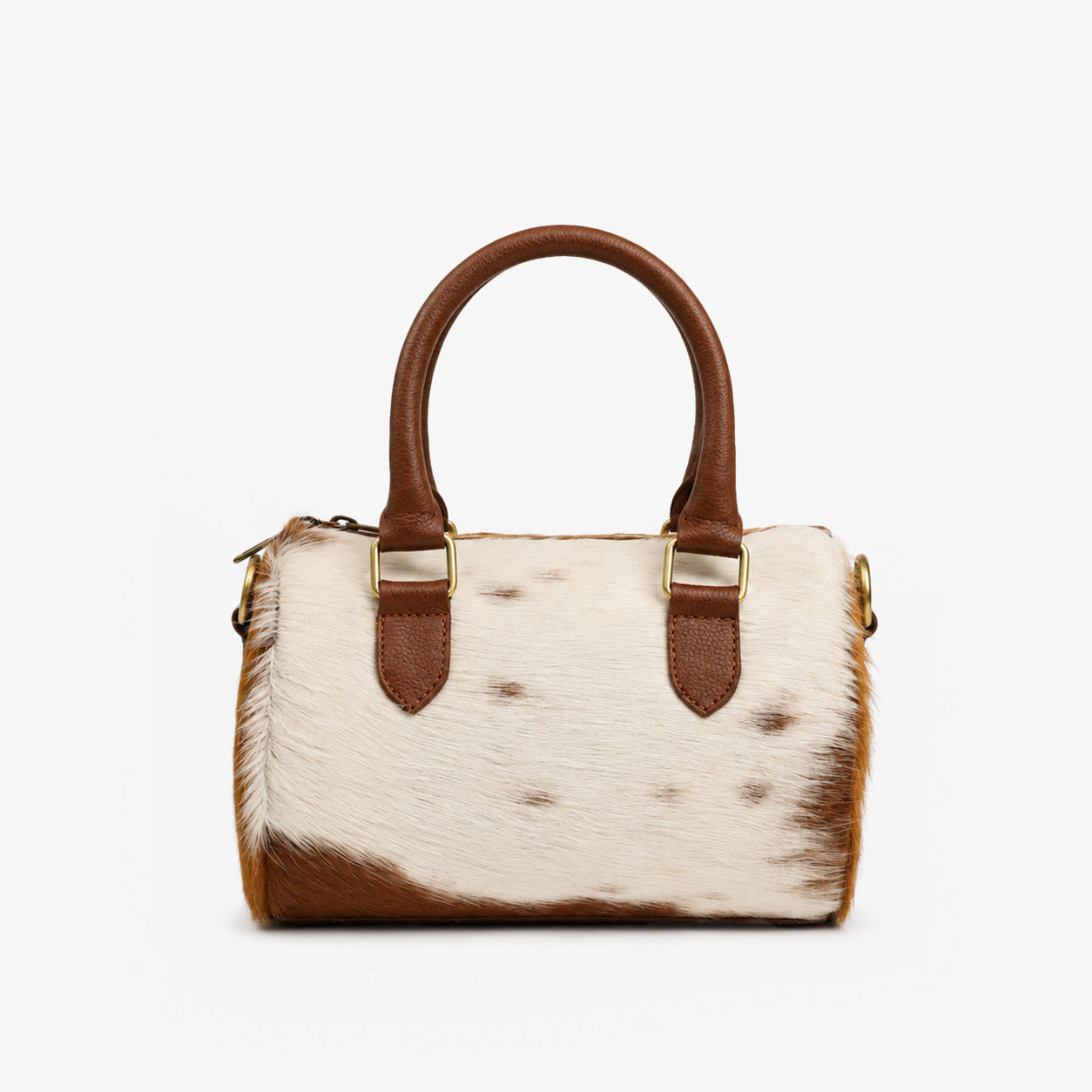
FUR's newest arrival is the most premium thing the brand has made. Two colourways of a genuine hair-on goat hide tote — Espresso & Ivory and Ivory & Cognac — each piece carrying its own natural markings that make it impossible to replicate.
This is not a bag that is trying to look like something from an international brand. This is a bag that is genuinely better than most of what international brands sell at ten times the price — because it is made from a material that is rarer, more distinctive, and more honest than anything a synthetic production line can produce.
At Rs.8,500 — down from Rs.9,999 — it is the most serious bag in the Pakistani market at this price point. Full stop.
FUR — Premium Bags & Clutches · Made in Pakistan
Shop the FUR Collection
Genuine Leather · Goat Hide · Premium PU · Totes · Clutches · Shoulder Bags
Rs.199 delivery Pakistan-wide · Free shipping over Rs.1,999 · 15-day exchange · 1,170+ five-star reviews
Written by Umaima Sufyan for FUR — because Pakistani women deserve a bag market that takes them seriously. 🖤